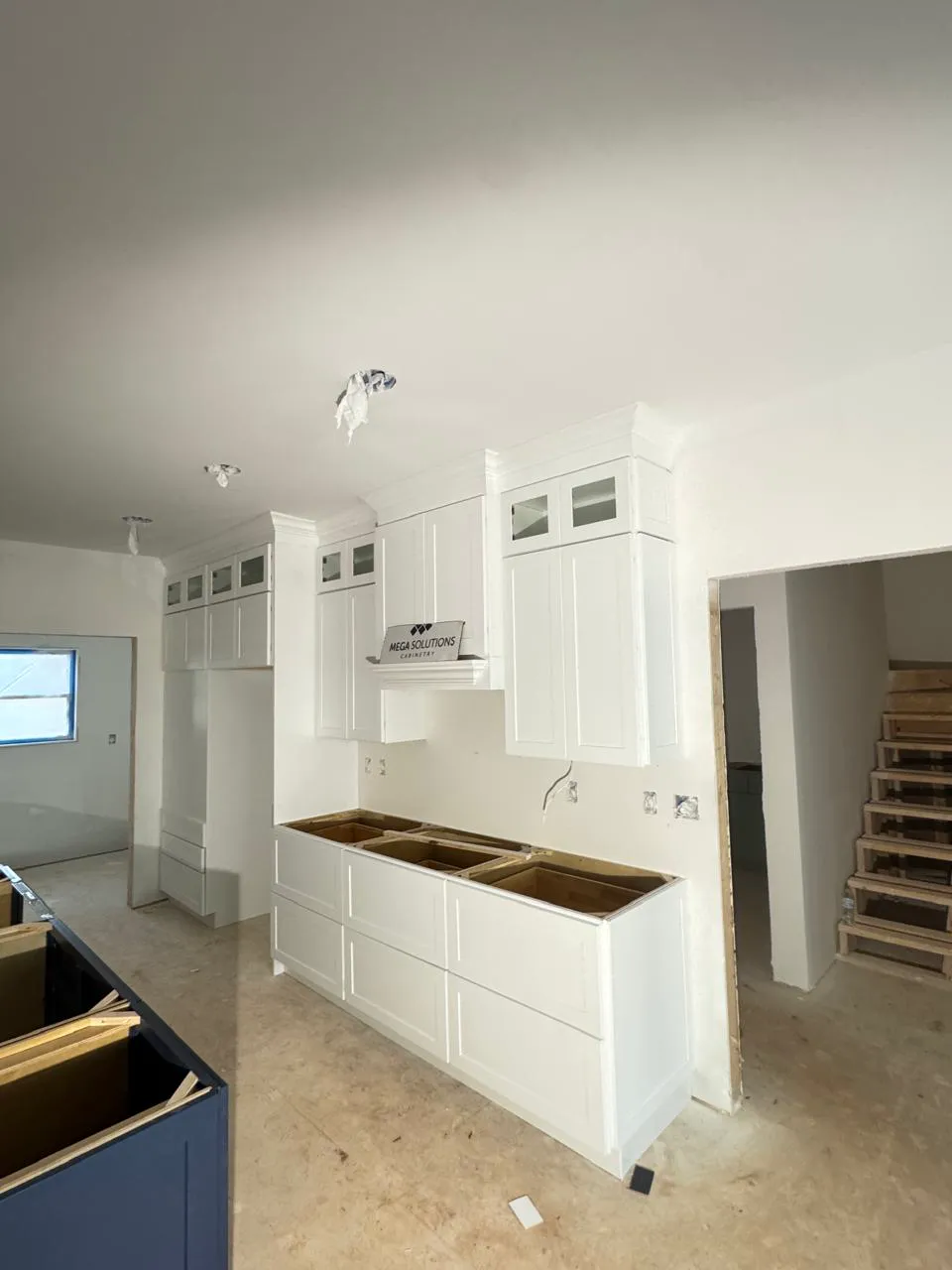
Multifamily and Apartment Cabinet and Countertop Installation
Published •7 min read
Multifamily kitchens have to survive what a single-family kitchen rarely sees: a new resident every year or two, move-in and move-out damage, and maintenance staff who need every unit to work the same way. The right cabinets and countertops are the ones that hold up to that use and can be installed the same way in unit after unit.
Mega Solutions installs cabinets and stone countertops for developers, general contractors and property owners as well as homeowners. This guide covers what to specify and plan for in an apartment, condo or townhome building.
Specify for Heavy Use
The Kitchen Cabinet Manufacturers Association (KCMA) runs a certification for cabinets tested under its ANSI/KCMA A161.1 standard, covering structural strength, door and drawer integrity and finish durability. KCMA also offers a separate Severe Use Certification for cabinets intended for the heavier wear of apartment kitchens. If your spec calls for it, ask the cabinet supplier for the certification for the exact line you're buying.
- Box and shelves: plywood or high-quality engineered panels hold screws and resist water better than low-density board at the sink. See plywood vs. particleboard.
- Hinges and slides: soft-close, full-extension hardware rated for frequent use, and the same hardware across all units so maintenance stocks one part.
- Finish: a durable painted or factory-applied finish that can be touched up between residents.
- Sink base: a water-resistant floor or liner, because the sink base takes most leak damage.
Countertops for Apartments and Condos
| Material | Why owners pick it | Watch for |
|---|---|---|
| Quartz | Uniform look in every unit; non-porous, no sealing | Hot pans can damage the resin; residents need trivets |
| Granite | Hard, heat-tolerant natural stone; hides wear | Some stones need periodic sealing; slabs vary in pattern |
| Quartzite | Very hard natural stone for higher-end units | Usually a premium; sealing needs vary |
For a side-by-side look at the two most common choices, see quartz vs. granite. Marble is rarely used in rental kitchens because it etches with acids; see marble etching vs. staining.
Repeat Layouts: One Drawing per Unit Type
Most buildings use a handful of unit types. Treat each as a standard: one cabinet drawing, one countertop drawing and one hardware layout per unit type, with mirrored units drawn as mirrors rather than guessed on site. That keeps orders accurate, lets crews work faster after the first few units, and gives maintenance one set of replacement parts.
Accessibility Rules for Multifamily
The federal Fair Housing Act's design and construction requirements apply to multifamily buildings with four or more units first occupied after March 13, 1991. In elevator buildings they cover every unit; without an elevator, they cover the ground-floor units. One of the seven requirements is usable kitchens and bathrooms: a person using a wheelchair must be able to maneuver in the space. Public and common-use areas, such as a clubhouse kitchen, may also fall under the ADA.
Phasing the Install Through a Building
- Floor by floor or building by building: agree on the order with the general contractor so deliveries match the units that are ready.
- Storage and protection: cabinets need dry, secure storage and protection once installed. See cabinet lead times for ordering ahead.
- Templating in batches: countertops are templated once a group of units has level, secured base cabinets.
- Elevator and loading rules: book freight elevators and docks for cabinet and slab deliveries.
- A unit-by-unit punch list: record adjustments per unit so nothing is missed at turnover.
What to Send for a Quote
- Unit-type plans and the unit count for each type
- Cabinet line, color, hardware and any certification you require
- Countertop material and edge, plus bath vanity tops if included
- Accessible unit locations and their approved drawings
- Phase schedule and site access rules
- Whether you supply the cabinets or need them supplied with the install
Frequently Asked Questions
What is the best countertop for apartments?
Quartz and granite are the most common. Quartz looks the same in every unit and needs no sealing but is sensitive to heat; granite is more heat-tolerant and hides wear, but some stones need periodic sealing.
What is KCMA Severe Use Certification?
A Kitchen Cabinet Manufacturers Association certification for cabinets intended for the heavier wear of apartment kitchens. Ask the supplier for the certification for the specific cabinet line.
Do apartment kitchens have to be accessible?
Under the Fair Housing Act, covered multifamily buildings with four or more units first occupied after March 13, 1991 must have usable kitchens and bathrooms in covered units. Your architect determines which units and standards apply.
Does Mega Solutions install cabinets in apartment buildings?
Yes. Mega Solutions installs cabinets and stone countertops for multifamily and commercial projects as well as single-family homes.
Planning a Multifamily Project? Get a Quote
Mega Solutions installs cabinets and granite, quartz, quartzite and marble countertops across metro Atlanta, for developers and contractors as well as homeowners. Send your unit plans and schedule for a quote.
Sources
Ready to start your kitchen project?
Get a free, no-obligation quote from Mega Solutions. We'll walk through your space and put together a plan that fits your budget.