Quartz vs. Granite Countertops: Which Is Better?
Published •Updated •10 min read
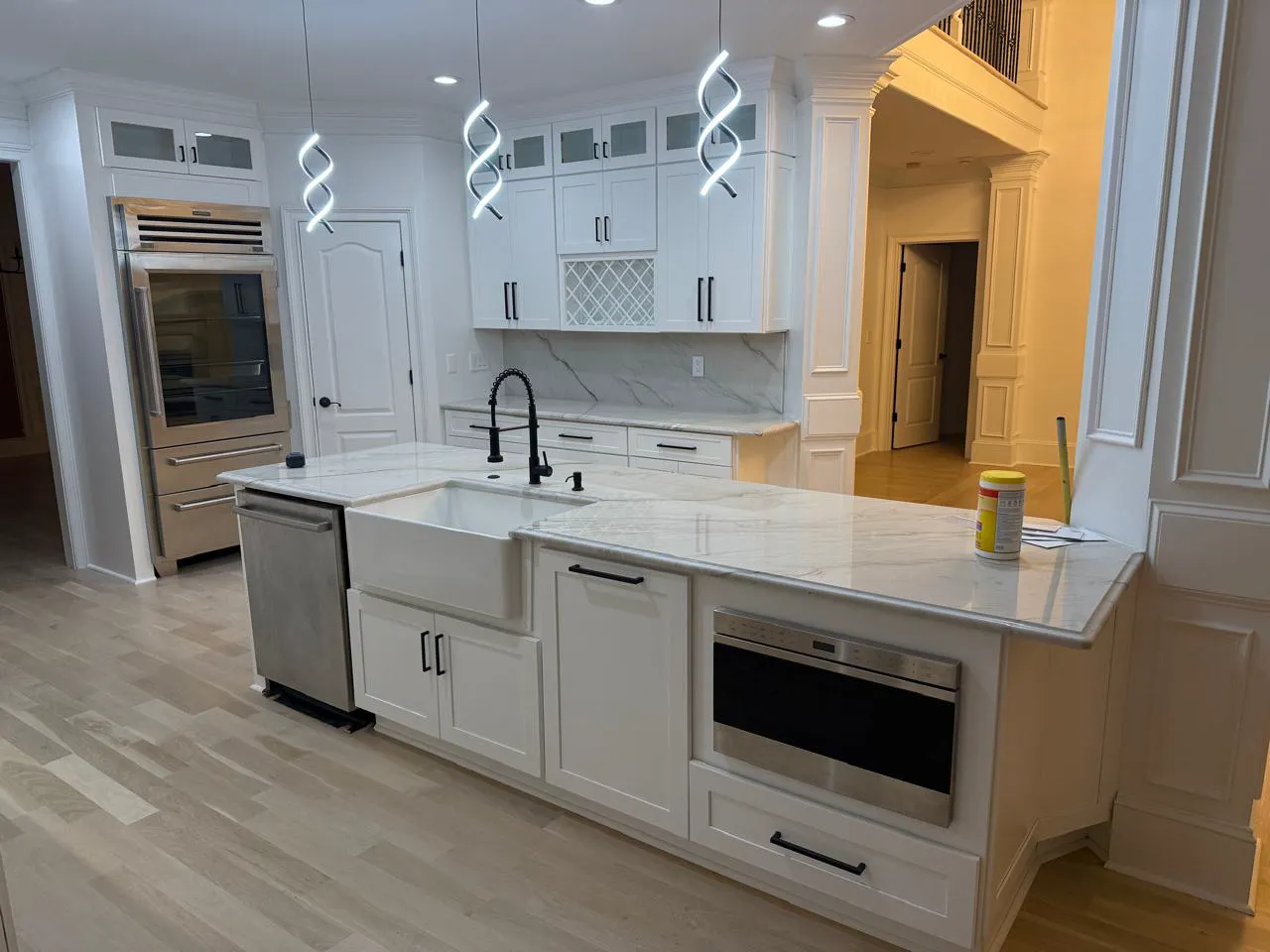
Quartz and granite are the two countertops most homeowners end up choosing between, and both are durable, attractive surfaces that can serve a kitchen well for many years. The real differences come down to upkeep, heat and looks.
Quartz generally needs less routine maintenance. It's non-porous, so it doesn't need sealing, and its color and pattern stay consistent from slab to slab. Granite is natural stone with patterns no factory can repeat, and it generally tolerates heat better than quartz. In exchange, most granite needs sealing from time to time.
In short: choose quartz if you want the least upkeep and a predictable look. Choose granite if you want a one-of-a-kind natural slab, more heat tolerance or an outdoor counter. Below you'll find a side-by-side comparison, what national cost guides say about price, and a short checklist to help you decide.
Quartz vs. Granite at a Glance
| Quartz (engineered) | Granite (natural) | |
|---|---|---|
| What it is | Crushed quartz bound with resin and pigments, made into slabs | Natural igneous rock, quarried and cut into slabs |
| Look | Consistent color and pattern; wide range, including marble-look designs | Each slab is different; natural depth, flecks and movement |
| Sealing | Not needed (Silestone's guide says not to apply sealants) | Usually recommended; how often varies by stone and sealer |
| Stains | Highly resistant (non-porous) | Resistant when sealed; more porous stones need more care |
| Heat | Resin can scorch; use a trivet or hot pad | Generally tolerates heat better than quartz |
| Everyday cleaning | Soap and warm water or a pH-balanced household cleaner | A neutral cleaner made for stone |
| Outdoors / strong sun | Many standard quartz lines are indoor-only; check the brand | Commonly used outdoors |
| Cost | Overlapping ranges in national guides (see the cost section) | Overlapping ranges in national guides (see the cost section) |
What Each Material Actually Is
Granite is an igneous rock that forms deep underground. It is quarried in large blocks, sliced into slabs and polished. Because it's natural, color and pattern vary from slab to slab, and sometimes within one slab.
Quartz countertops (often called engineered stone) are manufactured. Crushed natural quartz is mixed with resin and pigments, then pressed into slabs. That's why a quartz color looks much the same across slabs, and why designs such as clean whites and marble-look veining are easy to find.
Maintenance and Stains
This is the biggest practical difference. Quartz is non-porous, so spills stay on the surface. Silestone's care guide, for example, calls for regular cleaning with soap and warm water or a pH-balanced household cleaner, and it specifically says not to apply sealants or water repellents.
Granite varies in porosity, so most granite is sealed to slow down how quickly oil, wine or coffee can soak in. There is no single schedule. How often depends on the specific granite and how porous it is, the sealer used and that sealer manufacturer's instructions, and how heavily the counter is used.
Published guidance reflects that range. HomeAdvisor says granite is commonly sealed about once a year. A countertop specialist quoted by Fixr says most granite needs resealing every three to five years with standard sealers, and that some can go ten years or more with a top-quality sealer and the right cleaners. Some dense granites rarely need sealing at all. Your installer can tell you what suits the stone you choose.
- A simple absorption check: the Natural Stone Institute describes leaving a little hot water on the counter for 10 to 20 minutes, then wiping it off. If the stone has darkened, it's still absorbing moisture, which suggests it may benefit from sealing. Treat that as a reason to check with your installer or your sealer's instructions, not as an automatic reseal.
- Clean granite with a neutral stone cleaner. The Natural Stone Institute advises against everyday dish soap on stone, because it can leave a film that dulls or streaks the surface.
- Clean quartz with soap and warm water or a pH-balanced cleaner. Silestone's guide warns against bleach, oven and grill cleaners, and other strongly alkaline products.
- Wipe spills promptly on either surface, especially oil and colored liquids on lighter granite.
For more on looking after stone, see our guide on how to care for natural stone countertops.
Heat, Scratches and Everyday Wear
Heat
Quartz contains resin, and resin can scorch. Silestone's care guide says hot pans, pots and small electrical appliances should not be placed directly on the surface because this can cause scorching, dull areas and cracks, and it recommends a hot pad or trivet. That includes crock pots, electric skillets and griddles.
Both HomeAdvisor and Fixr say granite handles hot pans better than quartz. A trivet is still a sensible habit: Silestone's guide notes that sudden, extreme temperature changes can damage any stone, especially near the edges.
Scratches and chips
Both are hard surfaces that stand up well to everyday use. The weak points on both are edges and corners, which can chip from a heavy impact such as a dropped cast-iron pan. Use a cutting board on either surface: it protects the finish and your knives.
Outdoor kitchens and sunny spots
With long warm seasons in Georgia and South Carolina, many homeowners cook outdoors, and that changes the choice. Silestone's care guide says not to place its standard quartz outdoors or under UV light, because over the years the sun's rays may affect its color. Some brands make separate outdoor-rated lines, so if a counter will be outside or in strong direct sun, check that specific product's guidance, or consider granite.
Looks, Seams and Matching Slabs
Much of granite's appeal is that no two slabs are exactly alike. The trade-off is that a showroom sample is only a guide. Ask to see the actual slab, or a photo of it, before fabrication, especially for an island where the pattern will be on display.
Quartz usually has a more consistent color and pattern from slab to slab, which helps when long perimeter runs and an island need to look alike. That doesn't guarantee less visible seams, though. How noticeable a seam is depends on:
- Color and pattern: a uniform color usually hides a seam better than bold veining or large movement, which has to be lined up across the joint
- Slab layout: where the seams fall, which depends on slab size and the shape of your kitchen
- Fabrication quality: how precisely the edges are cut, matched and joined
- Installation: how level the cabinets are and how carefully the pieces are set and filled
With either material, ask where the seams will be placed and how the pattern will be matched across them before you approve the layout.
Both look best when chosen together with the cabinets. You can try stone and cabinet combinations on our Colors page, or browse finished kitchens in our gallery.
Cost: What Drives the Price
Cost guides publish two kinds of numbers, and it helps to keep them apart:
- Material cost: the price of the slab itself, per square foot
- Installed cost: the whole project, meaning the material plus fabrication (cutting, edges and cutouts) and installation
All the figures below are national estimates. They come from different publishers using different project sizes and assumptions, so they show the general range, not a like-for-like comparison and not what a local installer will quote.
| Source (updated) | Material | Range and average | Project the estimate assumes |
|---|---|---|---|
| Fixr (Jan. 2026) | Quartz | $2,600-$4,400; average about $3,500 | 35 sq. ft. of mid-grade quartz in a standard kitchen |
| Fixr (Jan. 2025) | Granite | $2,500-$5,000; average about $3,500 | 30 sq. ft. of average-grade granite, eased edge, no backsplash |
| HomeAdvisor (June 2026) | Granite | $2,000-$4,000; average about $3,250 | What most homeowners report spending; project size and inclusions not stated |
| Source | Quartz | Granite |
|---|---|---|
| Fixr | About $50-$200+, depending on quality | About $40-$200; exotic stones higher |
| HomeAdvisor | Not covered in the guide cited | Most material $40-$60; specialty granite higher |
What moves the price up or down, with either material:
- The slab itself: entry-level colors versus premium or rare designs and exotic granites
- Square footage and layout: more runs, corners and an island mean more material and more seams
- Edge profile: a standard eased edge costs less than decorative profiles, which Fixr prices at roughly $10 to $60 per linear foot extra
- Cutouts: undermount sink, cooktop and faucet holes
- Backsplash: a full-height stone backsplash adds material and labor
- Removal and delivery: taking out the old countertops, plus delivery (Fixr lists roughly $100 to $200)
For a full granite breakdown, read our granite countertop cost guide.
A Note on Silica Dust
You may have seen news about silica and engineered stone. In February 2026, OSHA and NIOSH issued an updated hazard alert on silica in the countertop industry. It is about workers: cutting, grinding, edging and polishing stone releases fine crystalline silica dust, and workers who breathe it in are at risk of silicosis, a serious lung disease.
The alert notes that silica content varies widely. It ranges from under 0.2% to about 95% in engineered stone, depending on the product. Granite typically contains 10 to 50%, natural quartzite 95% or more, and marble very little. So the concern applies to many kinds of stone, natural and engineered, not only quartz.
That hazard comes from dust created during fabrication and installation work. Everyday use of an installed countertop, such as cooking, cleaning and setting things down, doesn't involve cutting or grinding the stone. If a counter ever needs to be cut or drilled, for example for a new faucet hole, have a professional do it rather than doing it yourself. When comparing fabricators, it's reasonable to ask how they control dust. The alert describes water-based cutting and local exhaust ventilation as key controls.
Which Should You Choose?
Quartz is likely the better fit if you:
- want a surface that doesn't need sealing
- cook a lot with oils, sauces and red wine, or have young kids
- want a clean, consistent white or a marble look without marble's upkeep
- want several slabs or a large island to look closely alike
Granite is likely the better fit if you:
- want a natural slab with its own character
- often set down hot cookware and want more tolerance for heat
- are building an outdoor kitchen or a counter in strong sun
- don't mind occasional sealing, or are choosing a dense stone that rarely needs it
Still deciding between quartz and marble instead? See marble vs. quartz countertops.
Frequently Asked Questions
Is quartz more expensive than granite?
Not necessarily. National cost guides show overlapping ranges for the two, but they use different project sizes and assumptions, so their averages aren't a direct comparison. The specific slab, edge profile, cutouts and kitchen size usually matter more than the category, and a quote based on your measurements is the only reliable number.
Does quartz need to be sealed?
No. Quartz is non-porous. Silestone's care guide, for example, calls for regular cleaning with soap and warm water and says not to apply sealants or water repellents.
How often should granite be sealed?
There is no single answer. It depends on the specific granite and its porosity, the sealer and its manufacturer's instructions, and how the counter is used. Published guidance ranges from about once a year (HomeAdvisor) to every three to five years or longer (a specialist quoted by Fixr), and some dense granites rarely need it. An absorption check can show whether the stone is taking in water; your installer can advise from there.
Can I put a hot pan on quartz or granite?
Not directly on quartz: Silestone warns that hot pans can cause scorching, dull areas and cracks, so use a trivet or hot pad. Granite generally handles hot pans better than quartz, though a trivet is still a sensible habit with any stone.
Is quartz the same as quartzite?
No. Quartz countertops are engineered from crushed quartz, resin and pigments. Quartzite is a natural metamorphic rock that is quarried like granite. They look and behave differently, and they are priced differently.
Which is better for an outdoor kitchen?
Granite is usually the safer choice. Silestone's care guide says not to place its standard quartz outdoors or under UV light. Some brands make outdoor-rated lines, so check the specific product's guidance before using quartz outside.
Is the silica in quartz countertops a risk once they're installed?
The OSHA and NIOSH silica warnings concern workers who cut, grind and polish stone, which releases silica dust. Everyday kitchen use doesn't involve those tasks. Silica is also found in natural stone, including granite and quartzite. If a countertop ever needs to be cut or drilled, have a professional do it.
Planning New Countertops? Get a Quote from Mega Solutions
Choosing between quartz and granite is easier when you can compare real materials for your own kitchen.
Mega Solutions installs quartz, granite, quartzite and marble countertops, and also sells and installs cabinets. Whether you're replacing your countertops or planning a larger kitchen update, you can request a personalized quote based on your measurements, preferred materials and project details.
Before requesting your quote, it helps to have:
- Approximate countertop measurements
- Photos of your existing kitchen
- Preferred stone materials or colors
- Sink and cooktop details
- Whether old countertops need to be removed
Sources
- Fixr, "Quartz Countertop Installation Cost" (updated January 2026): fixr.com
- Fixr, "Granite Countertop Installation Cost" (updated January 2025): fixr.com
- HomeAdvisor, "How Much Do Granite Countertops Cost?" (updated June 2026): homeadvisor.com
- Cosentino, "Silestone Care & Maintenance" (U.S. care guide): cosentino.com
- Natural Stone Institute, "How to Care for Your Granite Countertops": usenaturalstone.org
- OSHA and NIOSH, "Hazard Alert: Worker Exposure to Silica during Countertop Manufacturing, Finishing, and Installation" (February 2026): cdc.gov
Ready to start your kitchen project?
Get a free, no-obligation quote from Mega Solutions. We'll walk through your space and put together a plan that fits your budget.