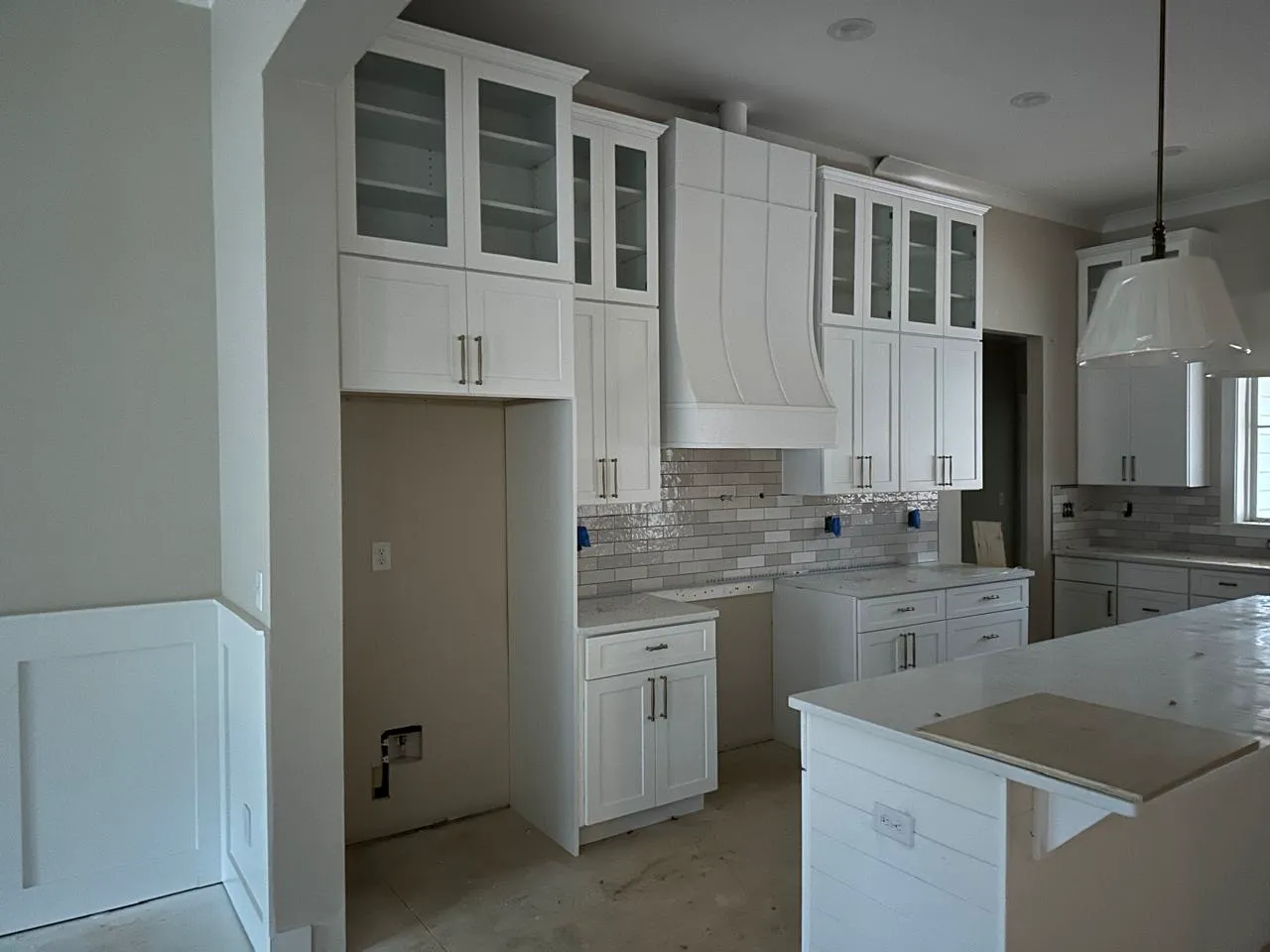
Quartz Countertops: The Complete Buying Guide
Published •8 min read
Quartz countertops, also called engineered stone, are made from crushed quartz bound with resin and pigments. They're popular because they don't need sealing, resist stains, and come in consistent colors, including convincing marble looks. Their main limits come from the resin: quartz should be protected from direct heat and isn't meant for outdoor sun.
Quartz Pros and Cons at a Glance
| Strengths | Things to watch |
|---|---|
| Non-porous; no sealing needed | Resin can scorch; use trivets for hot pans |
| Resists stains | Not for outdoor or strong UV exposure |
| Consistent color and pattern | Less one-of-a-kind character than natural stone |
| Wide range, including marble-look designs | Harsh chemicals and abrasive scrubbing can damage it |
| Simple everyday cleaning | Premium designer colors can cost as much as natural stone |
How Quartz Is Made
Quartz particles are mixed with resin, pigments and other ingredients, then pressed into slabs and cured. Manufacturers often advertise a high quartz content. The Natural Stone Institute points out that the commonly quoted figure (around 93%) is a maximum, measured by weight, and that the actual share varies by brand and color. The resin is what gives quartz its low porosity, and also what makes it more sensitive to heat than natural stone.
How Quartz Performs
Stains and sealing
Quartz is non-porous, so spills stay on the surface. Silestone's care guide goes as far as advising against sealants or water repellents, since the finish is the product's own. The Natural Stone Institute notes that quartz isn't completely immune to staining, so wiping spills promptly is still wise.
Heat
Silestone warns that hot pans, pots and small appliances placed directly on the surface can cause scorching, dull areas and cracks, and specifically mentions crock pots, electric skillets and griddles. Use trivets and hot pads every time.
Scratches and cleaning
Quartz is durable for everyday use, but use a cutting board. Silestone's guide warns that repeated use of abrasive scrubs can dull the finish, and that bleach, oven cleaners and other strongly alkaline products should be avoided.
Outdoors
Silestone's guide says not to place its standard quartz outdoors or under UV light, as the sun may affect its color over time. For outdoor kitchens, granite or quartzite are better choices.
Choosing Color and Quality
HomeAdvisor groups quartz into three broad quality tiers: lower quality at about $50 to $60 per square foot, standard (builder or commercial grade) at about $60 to $80, and premium and designer at about $80 to $100 or more. Some tips for choosing:
- See a large sample or a full slab photo, especially for marble-look designs where the vein pattern repeats.
- Check the pattern on islands and long runs, where seams and vein direction matter.
- Compare like with like: the same brand line and thickness across quotes.
- Look at it in your own light, next to your cabinet and floor samples.
You can try stone and cabinet combinations on our Colors page.
Caring for Quartz
- Wipe down with soap and warm water or a pH-balanced household cleaner.
- Use trivets and hot pads for anything hot.
- Use cutting boards.
- Avoid bleach, oven and grill cleaners, paint strippers and other harsh chemicals.
- Avoid repeated abrasive scrubbing; use a non-scratch pad for stuck-on spots.
What Quartz Costs
National guides put a typical quartz project at about $3,500 to $4,500. Fixr puts 35 square feet of mid-grade quartz at $2,600 to $4,400 (January 2026), and HomeAdvisor reports most homeowners spend $1,500 to $8,000 (June 2026). These are national estimates, not Mega Solutions prices. See the full breakdown in our quartz countertop cost guide.
A Note on Silica
The February 2026 OSHA and NIOSH hazard alert on silica concerns workers who cut, grind and polish stone, both engineered and natural, which releases silica dust. Everyday use of an installed countertop doesn't involve those tasks. If a counter ever needs cutting or drilling, have a professional do it.
Is Quartz Right for You?
Choose quartz if you want simple care, consistent color and a marble look without marble's etching. Consider granite or quartzite if you want a one-of-a-kind natural slab, more heat tolerance, or an outdoor counter. Compare them in quartz vs. granite and quartzite vs. quartz.
Frequently Asked Questions
Do quartz countertops need to be sealed?
No. Quartz is non-porous, and Silestone's care guide advises against applying sealants or water repellents.
Can you put hot pans on quartz?
No. Silestone warns that hot pans, pots and small appliances can cause scorching, dull areas and cracks. Always use a trivet or hot pad.
Can quartz be used outdoors?
Standard quartz isn't meant for outdoor use. Silestone advises against placing it outdoors or under UV light. Granite or quartzite are better for outdoor kitchens.
How do you clean quartz countertops?
Use soap and warm water or a pH-balanced household cleaner. Avoid bleach, oven cleaners and repeated abrasive scrubbing.
How much do quartz countertops cost?
National guides put a typical project at roughly $3,500 to $4,500, with quartz at about $50 to $200 or more per square foot depending on quality and brand.
Planning Quartz Countertops? Get a Quote from Mega Solutions
Mega Solutions installs quartz, granite, quartzite and marble countertops, and also sells and installs cabinets. Request a personalized quote based on your measurements, the colors you like and your project details.
Before requesting your quote, it helps to have:
- Approximate countertop measurements
- Photos of your existing kitchen
- Quartz colors or brands you like
- Sink and cooktop details
Sources
- Cosentino, "Silestone Care & Maintenance" (U.S. care guide): cosentino.com
- Natural Stone Institute, "Natural Quartzite and Engineered Quartz: What's the Difference?": usenaturalstone.org
- HomeAdvisor, "How Much Do Quartz Countertops Cost?" (updated June 2026): homeadvisor.com
- Fixr, "Quartz Countertop Installation Cost" (updated January 2026): fixr.com
- OSHA and NIOSH, "Hazard Alert: Worker Exposure to Silica during Countertop Manufacturing, Finishing, and Installation" (February 2026): cdc.gov
Ready to start your kitchen project?
Get a free, no-obligation quote from Mega Solutions. We'll walk through your space and put together a plan that fits your budget.