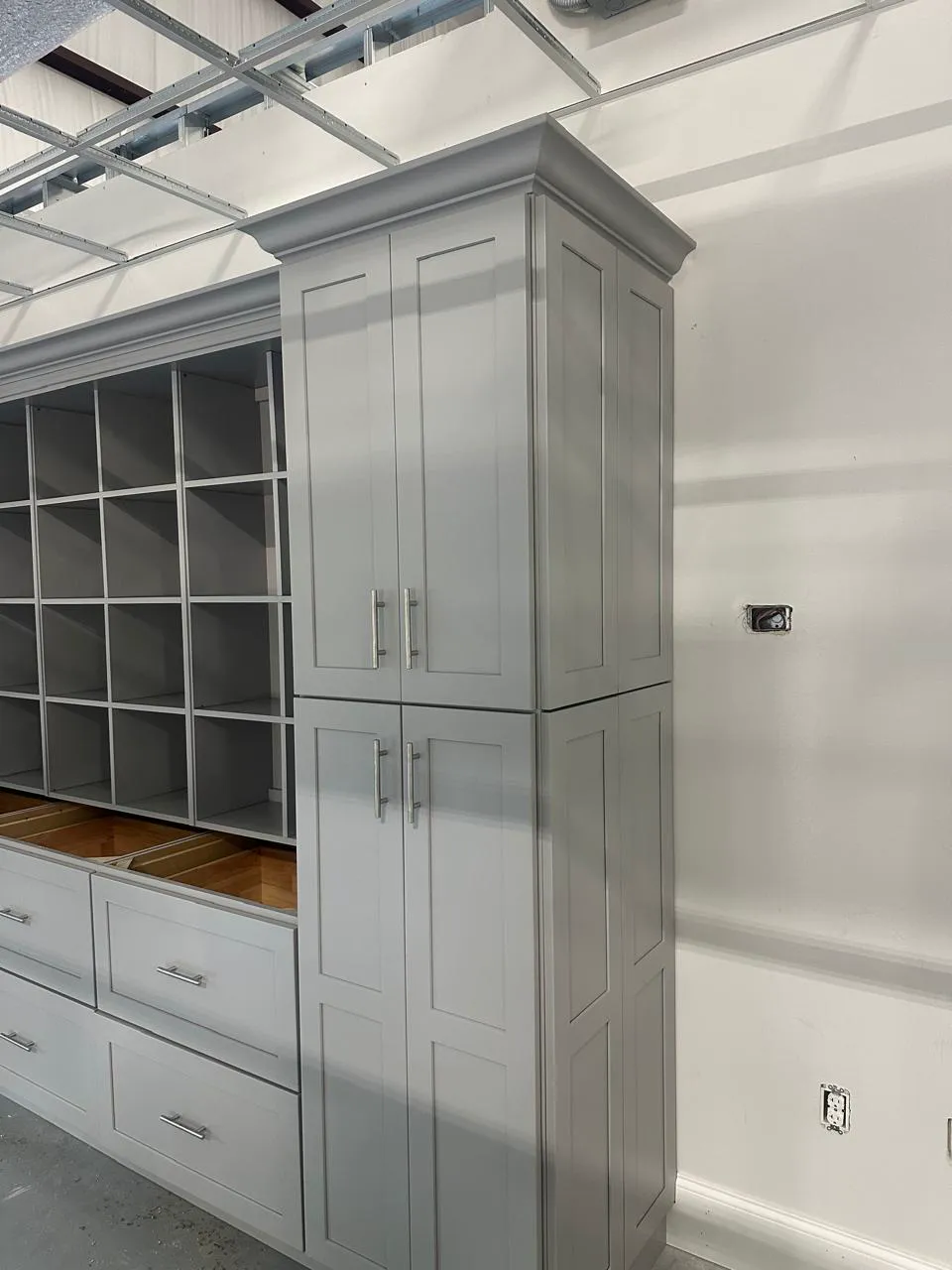
Cabinets and Countertops for Medical and Dental Offices
Published •6 min read
Cabinets and countertops in a medical or dental office have to be easy to clean and disinfect, stand up to frequent use and moisture at sinks, and fit an accessible layout. The practice's infection-control lead, the design team and any applicable regulations set the requirements; the installer's job is to build them accurately and leave surfaces with as few places for dirt and moisture to collect as possible.
Cleanable Surfaces Come First
CDC's Guidelines for Environmental Infection Control in Health-Care Facilities treat countertops as environmental surfaces that are cleaned and disinfected on a regular schedule and when soiled. Its design checklist includes the type of surface finish (porous vs. non-porous), and it warns that wet, porous or cracked materials, including countertops and sink cabinets in need of repair, can support mold growth. In practice:
- Choose non-porous or sealed countertop surfaces that tolerate the disinfectants the practice uses.
- Keep seams few, tight and filled. See countertop seams.
- Use integrated or tight-fitting backsplashes so liquids don't run behind the counter.
- Fix leaks and damaged sink cabinets quickly; swollen, wet panels shouldn't stay in service.
Countertop Materials
| Material | Notes |
|---|---|
| Quartz | Non-porous, uniform and needs no sealing; check that the manufacturer approves your disinfectants |
| Granite | Hard and heat-tolerant; some stones need periodic sealing to stay stain-resistant |
| Quartzite | Very hard natural stone; sealing needs vary |
| Marble | Etches with acids and some cleaners; usually avoided in clinical areas |
Always check the countertop manufacturer's care guidance against the practice's cleaning products. See how to clean quartz and marble etching vs. staining.
Cabinet Layout and Construction
- Drawers for supplies in exam rooms, organized so staff can restock quickly.
- Closed storage rather than open shelving where dust is a concern.
- Durable, cleanable finishes on doors and boxes, with sound sink-base construction. See plywood vs. particleboard.
- Locking cabinets where the practice requires them for medications or records.
Accessibility
Medical offices are public accommodations and usually follow the 2010 ADA Standards, including counter, sink and reach requirements in staff and patient areas where they apply. Your architect sets these. See accessible kitchen and counter dimensions.
Installing Around Patients
- Schedule work after hours, on closed days or room by room.
- Contain dust and keep work areas closed off from patient areas.
- Most stone cutting happens in the shop; any on-site cutting must control silica dust. See engineered stone and silica safety.
- Leave rooms clean and ready for the practice's own disinfection before patients return.
Frequently Asked Questions
What countertop is best for a medical office?
A non-porous or sealed surface that tolerates the practice's disinfectants, with few, tight seams. Quartz is common because it needs no sealing; check the manufacturer's approved cleaners.
Is marble a good choice for a dental office?
Usually not for clinical areas. Marble etches with acids and some cleaning products; it's better suited to reception or decorative areas.
Does Mega Solutions install cabinets in medical offices?
Mega Solutions installs cabinets and stone countertops for commercial spaces, including offices, built to the practice's approved drawings.
Building Out a Practice? Get a Quote
Mega Solutions installs cabinets and granite, quartz, quartzite and marble countertops for businesses and contractors across metro Atlanta. Send your drawings and schedule for a quote.
Sources
Related Reading
Ready to start your kitchen project?
Get a free, no-obligation quote from Mega Solutions. We'll walk through your space and put together a plan that fits your budget.