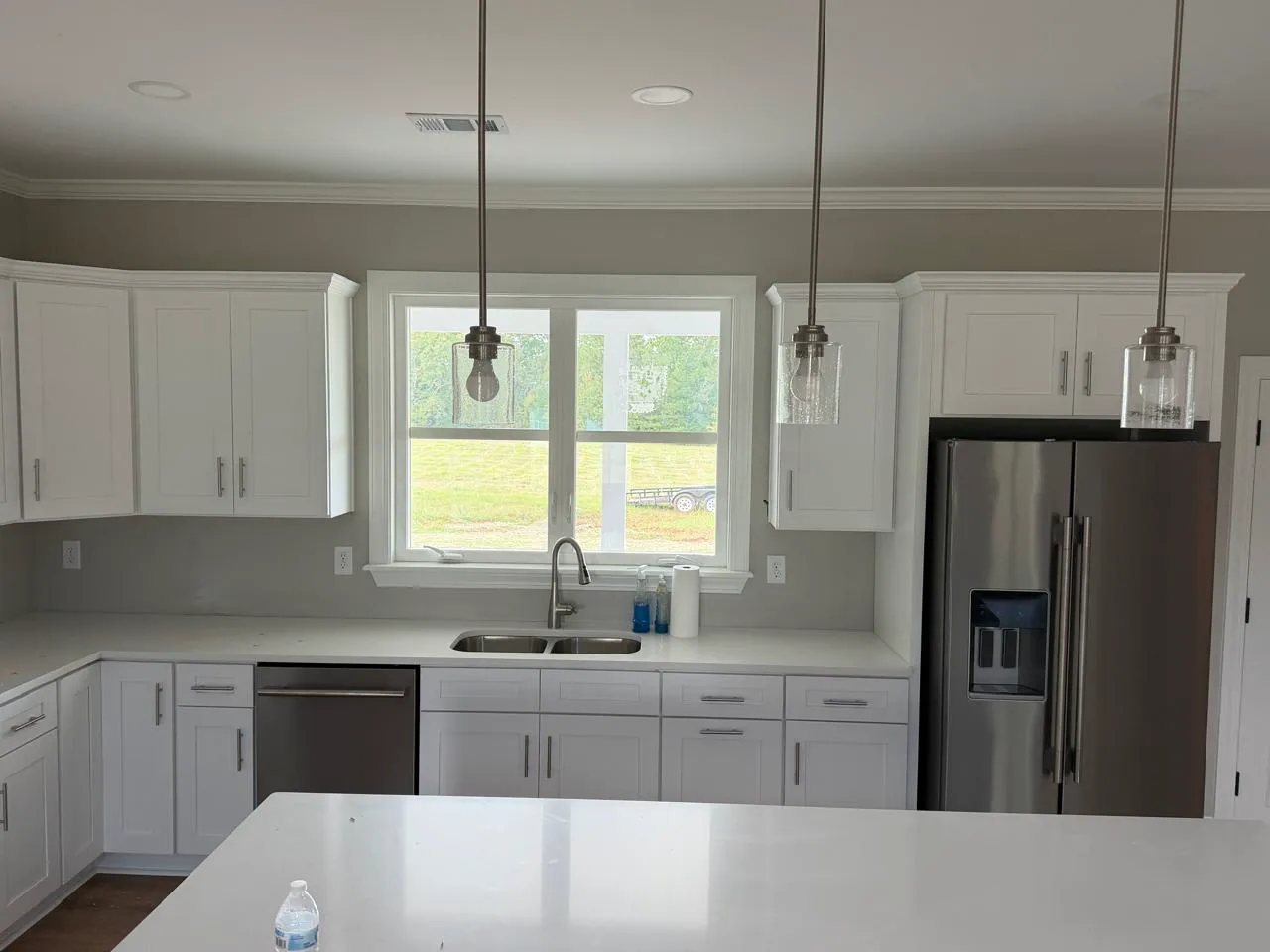
Frameless vs. Face-Frame Cabinets: What's the Difference?
Published •5 min read
Cabinets are built in two basic ways. Face-frame cabinets have a frame of stiles and rails on the front of the box, which stiffens it and gives the hinges something to mount to. Frameless (European-style) cabinets skip that frame, so the doors cover the whole box for a cleaner, more contemporary look and slightly more interior space. A third style, inset, sets the doors flush inside the frame and is the most expensive.
The Three Styles at a Glance
| Face-frame | Frameless | Inset | |
|---|---|---|---|
| Look | Traditional; frame visible around doors | Clean and contemporary; doors cover the box | Doors sit flush inside the frame; classic, furniture-like |
| Interior space | Frame slightly narrows openings | Slightly more usable space | Frame narrows openings |
| Construction | Frame stiffens the box and holds the hinges | Box itself provides rigidity | Requires precise fitting and special hardware |
| Cost (Fixr) | Generally the budget-friendly option | About 20%-50% more than framed | The most expensive |
Face-Frame Cabinets
This Old House describes the face frame as stiles and rails that stiffen the cabinet box and provide a mount for the hinges. On a well-built framed cabinet, those joints are so tight the joint line almost disappears. Fixr calls framed cabinets traditional and budget-friendly. They suit traditional, transitional and Shaker kitchens.
Frameless Cabinets
Frameless construction eliminates the face frame, giving a more contemporary look and slightly more interior space, according to This Old House. Without the frame, the box itself must be well built and square, so box quality matters even more. Fixr estimates frameless cabinets cost about 20% to 50% more than framed.
Inset Cabinets
Inset doors and drawer fronts sit flush with the cabinet frame. Fixr notes they require more precise manufacturing and special hardware, which makes them the most expensive option. The result is a classic, furniture-quality look.
How to Choose
- Style: framed for traditional and Shaker kitchens; frameless for sleek, modern ones; inset for a premium classic look.
- Storage: frameless gives slightly more usable interior space.
- Budget: framed is usually the most economical; inset costs the most.
- Build quality: whatever the style, check the box, drawers, glides and hinges. See how to choose quality kitchen cabinets.
Frequently Asked Questions
What is the difference between framed and frameless cabinets?
Framed cabinets have a front frame of stiles and rails that stiffens the box and holds the hinges. Frameless cabinets skip the frame, so doors cover the whole box and there's slightly more interior space.
Are frameless cabinets more expensive?
Fixr estimates frameless cabinets cost about 20% to 50% more than framed cabinets.
What are inset cabinets?
Cabinets whose doors and drawer fronts sit flush inside the frame. They need precise manufacturing and special hardware, making them the most expensive style.
Which is better for a Shaker kitchen?
Shaker doors work with any style, but framed and inset cabinets suit the traditional Shaker look especially well.
Choosing Cabinets? Get a Quote from Mega Solutions
Mega Solutions sells and installs kitchen cabinets, and we can also install your countertops in granite, quartz, quartzite or marble. Request a personalized quote and browse styles in our shop.
Sources
- This Old House, "All About Kitchen Cabinets" (updated June 2026): thisoldhouse.com
- Fixr, "How Much Does It Cost to Install Kitchen Cabinets?" (updated January 2026): fixr.com
Ready to start your kitchen project?
Get a free, no-obligation quote from Mega Solutions. We'll walk through your space and put together a plan that fits your budget.